Why Anytron
You are here: Home1 > In-line system2 > Exploring Equipment for Same-Day Label Delivery in Print Shops


Quick label solutions: Same-Day Delivery for short runs!

Do you need a faster and more efficient option for your same-day label delivery and short-run label printing needs?
We will explore equipment options that can facilitate same-day label delivery for your print shop. Depending on your current setup, you may have either an analog printer or a digital printer device.
If you have an analog printer, we can consider how a digital label solution can enhance delivery times. Alternatively, if you have a digital printer, we will also explore various cutting solutions that can be paired with it to achieve perfect short-run labels and quick delivery.
You might find it hard to imagine how these two printing and cutting equipment can be connected and utilized simultaneously. Therefore, we will introduce equipment that combines both these technologies, ultimately presenting the most suitable solution for quick delivery and short-run labels.

Flexo label print vs Digital label print

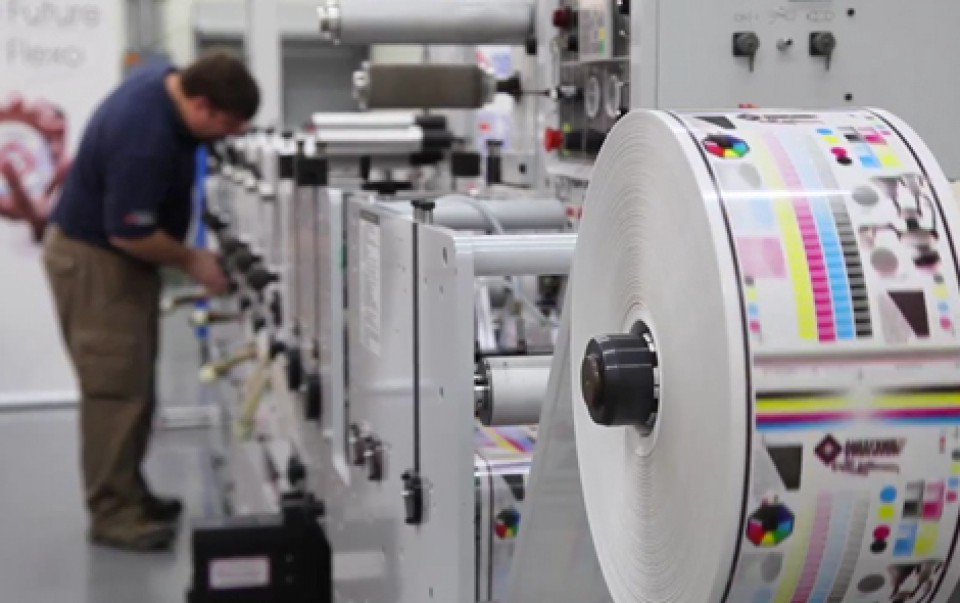
medium.com/@emmamiah123
Flexo printing, short for flexographic printing, is a traditional and widely used method for label printing. It involves transferring ink onto the label material using flexible relief plates. Flexo printing offers high printing speeds and is suitable for large print runs.
It can accommodate a wide range of label materials and finishes, including different types of adhesives and coatings. Flexo printing also allows for a variety of color options and special effects, such as metallic inks and embossing. However, it typically requires more setup time and higher initial costs for plate production.

Digital label printing, on the other hand, utilizes digital technology to directly transfer ink onto the label material. It offers advantages in terms of flexibility and customization. Digital printing allows for easy and quick artwork changes, making it suitable for short print runs, variable data printing, and personalized labels. It eliminates the need for plates, reducing setup time and costs.
Digital printing also enables high-resolution printing and precise color matching. However, it may have slower printing speeds compared to flexo and limited compatibility with certain label materials and finishes. Additionally, the cost per unit may be higher for large print runs.

Unlike traditional printing methods, digital label printing does not require the production of plates specific to each image and does not necessitate color calibration. This advantage allows for printing small quantities and a variety of orders on the same day. However, it’s important to note that digital printing is limited to the printing process itself.
While having a digital printer allows for printing small quantity and variety orders on the same day, it’s essential to understand that digital printing is only limited to printing, and the cutting process is entirely different and cannot be completed on the same day.
The Key to Same-Day Delivery: Selecting the Right Cutting Solution

When using an ordinary blade or flexible cutter is used, additional work and time are required to create a die that matches the customer’s cutting size and shape, and storage space and mold costs are also necessary. Even if you outsource the cutting process, it still takes a minimum of 2-3 days to complete.

As shortly mentioned earlier, a die specific to the customer’s desired cutting size and shape is always necessary for conventional analog or flexible die cutters. The time required for the entire process is a minimum of 2 days or more. Furthermore, outsourcing the cutting process takes a minimum of 3 days or longer. Therefore, completing all the processes within one day is simply impossible.

Indeed, digital cutting methods like digital knife cutting and laser cutting have been developed to overcome the limitations of traditional analog methods. These digital methods offer the advantage of not requiring molds for the cutting process. However, it’s important to note that digital knife cutting operates on a one-piece-at-a-time basis, and there can be certain tasks that are challenging or impossible to accomplish depending on their complexity.

Absolutely, the digital laser cutter serves as the ideal solution for achieving same-day label delivery. With its precise and efficient cutting capabilities, the digital laser cutter eliminates the need for molds and can effectively handle a wide range of cutting requirements. Its speed and flexibility make it perfectly suited to meet the demands of same-day label delivery.
Hybrid vs. Fully Digital Label Press
While laser cutters work faster than knife cutters, it can be difficult to achieve maximum efficiency if printing and cutting processes are carried out separately. The perfect solution to this problem is an In-line label press which is available in two types: Hybrid and Fully digital. Let’s learn more about them through the chart below.

Upgrade Your Label Shop with Anytron
Can you imagine the incredible synergy between a printer and a laser cutter?

Digital Label printing |

+ Seamless Laser finishing |
Any-JET digital In-line system offers a comprehensive solution that combines high-quality digital printing with an integrated laser cutting system. This advanced label press enables precise and efficient cutting of labels, eliminating the need for traditional die-cutting tools and reducing production downtime.
Say goodbye to the hassle of outsourcing cutting and waiting for days for your labels. With Anytron, you can now achieve same-day label delivery and short-run label printing without compromising on quality. Upgrade your label shop today with Anytron!
Learn more about ANY-JET Fully Digital Inline Label Printing series
 |
 |
| In-House Fully Digital Inline Label Press
|
Production Class Fully Digital One-Stop Label Solution
|
Request Info
 https://anytron.com/wp-content/uploads/2024/04/Brewexpo-americas-anytron-beer-label-thumbnail.png
788
940
anytron
https://anytron.com/wp-content/uploads/2022/05/로고_색상형.png
anytron2024-04-08 22:17:352024-04-08 22:17:35Join us at BrewExpo 2024: Leveling Up Your Beer Labeling
https://anytron.com/wp-content/uploads/2024/04/Brewexpo-americas-anytron-beer-label-thumbnail.png
788
940
anytron
https://anytron.com/wp-content/uploads/2022/05/로고_색상형.png
anytron2024-04-08 22:17:352024-04-08 22:17:35Join us at BrewExpo 2024: Leveling Up Your Beer Labeling https://anytron.com/wp-content/uploads/2024/04/ANY-PRESS-Webinar-packaging-printing.png
788
940
anytron
https://anytron.com/wp-content/uploads/2022/05/로고_색상형.png
anytron2024-04-03 01:36:002024-04-03 01:40:23Delving Deeper into ANY-PRESS: A Comprehensive Webinar Review
https://anytron.com/wp-content/uploads/2024/04/ANY-PRESS-Webinar-packaging-printing.png
788
940
anytron
https://anytron.com/wp-content/uploads/2022/05/로고_색상형.png
anytron2024-04-03 01:36:002024-04-03 01:40:23Delving Deeper into ANY-PRESS: A Comprehensive Webinar Review https://anytron.com/wp-content/uploads/2024/03/any-jet-ii-digital-label-press-1.png
788
940
anytron
https://anytron.com/wp-content/uploads/2022/05/로고_색상형.png
anytron2024-03-28 22:58:452024-03-28 23:04:18From Concept to Creation: Exploring ANY-JET II Digital Label Press
https://anytron.com/wp-content/uploads/2024/03/any-jet-ii-digital-label-press-1.png
788
940
anytron
https://anytron.com/wp-content/uploads/2022/05/로고_색상형.png
anytron2024-03-28 22:58:452024-03-28 23:04:18From Concept to Creation: Exploring ANY-JET II Digital Label Press


 Testimonials : Jeil first to install Anytron ANY-JET III Inline Label Press
Scroll to top
Testimonials : Jeil first to install Anytron ANY-JET III Inline Label Press
Scroll to top
